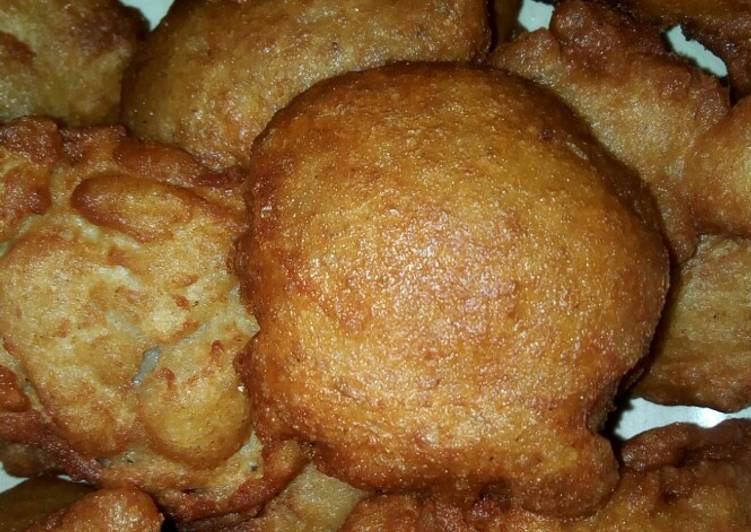
Hello everybody, it is Brad, welcome to my recipe page. Today, I’m gonna show you how to make a special dish, akara/ kosai. It is one of my favorites food recipes. For mine, I’m gonna make it a little bit tasty. This is gonna smell and look delicious.
Kosai or Akara (Bean Cakes) Nigerians will know these golden bean cakes or fritters as akara or kosai, depending on where you are from. They are a street or market food, fried up by the women in big pans of hot oil, eaten hot and fresh or wrapped up for a later meal. Akara, which is also known as black-eyed peas fritters or Acaraje, is a very delicious, deep-fried beans cake made from black-eyed peas paste. It is a vegetarian-friendly meal eaten in most parts of West Africa and Brazil.
Akara/ Kosai is one of the most well liked of current trending meals in the world. It is enjoyed by millions every day. It is simple, it is quick, it tastes delicious. Akara/ Kosai is something which I have loved my whole life. They’re nice and they look wonderful.
To get started with this particular recipe, we must prepare a few ingredients. You can have akara/ kosai using 7 ingredients and 4 steps. Here is how you cook that.
The ingredients needed to make Akara/ Kosai:
- Take Wake
- Make ready Albasa
- Get Jan tattasai
- Take Maggi
- Get Garin citta
- Get Gishiri
- Make ready Mai
These fluffy fried fritters are made from black eyed peas pureed with onions and hot peppers and often served by street vendors. Here's a spin on the recipe from our very own Marie Anne Daguidam (most people just call her Anna). Nigerian Kosai (Bean Cakes) Kosai abincin iyaye da kakanni ne a qasar hausa fulani domin kusan kowanne gida akan karya da koko da kosai How to make a perfect Akara ( Kosai) These delicious bean paste fritters go by the name of akara or koose in Ghana and are known variously in West Africa as kose, accara and kosai. Akara is commonly eaten as a snack or breakfast food, but it has many variations, as with much of West African food, it has travelled well.
Steps to make Akara/ Kosai:
- Ki surfa wake ki wanke ki sanya tattasai da albasa ki kai markade tare da robar da za a sanya miki ruwan nika. In an nika ki sa maggi, gishiri, garin citta yana sanya shi kamshi kuma ya cire gafin wake. Ki kara ruwan nikan a ciki kadan ki juya, kar yayi ruwa kar yayi kauri, ki buga sosai zaki ga har wani kwai ya keyi alamun ya bugu sosai.
- Ki sa mai a wuta da albasa ya soyu, in yayi zafi sosai ki fara suya, ki tabbatar manki yayi zafi domin in baiyi zafi ba shine yake sanya kosai yasha mai. Kinga yanda nawa man ya dau zafi.
- In kasan yayi sai ki juya saman shima ya soyu, yana yi saiki kwashe ki zuba a food wormer yanda zai rike zafinsa.
- Aci da yaji tare da kunun tsamiya, koko, kunun gyada da ko wani irin kunu. Akwai dadi sosai.
Nigerian Kosai (Bean Cakes) Kosai abincin iyaye da kakanni ne a qasar hausa fulani domin kusan kowanne gida akan karya da koko da kosai How to make a perfect Akara ( Kosai) These delicious bean paste fritters go by the name of akara or koose in Ghana and are known variously in West Africa as kose, accara and kosai. Akara is commonly eaten as a snack or breakfast food, but it has many variations, as with much of West African food, it has travelled well. It is called "akara" by the Yoruba people of south-western Nigeria and by the citizens of Sierra Leone, "kosai" by the Hausa people of Nigeria or "koose" in Ghana and is a popular breakfast dish, eaten with millet or corn pudding. In Nigeria, Akara is commonly eaten with bread, ogi (or eko), a type of cornmeal made with fine corn flour. Akira Kasai (笠井 亮, Kasai Akira) is a Japanese politician and member of the House of Representatives for the Japanese Communist Party, of which he is the policy chief.
So that is going to wrap this up with this exceptional food akara/ kosai recipe. Thank you very much for your time. I’m confident you can make this at home. There is gonna be interesting food at home recipes coming up. Don’t forget to save this page in your browser, and share it to your family, friends and colleague. Thanks again for reading. Go on get cooking!